Custom Laser Cutting for Plywood Brackets, Cutting Boards, and Personalized Gifts
- tonyperegrindesign
- 2 days ago
- 8 min read
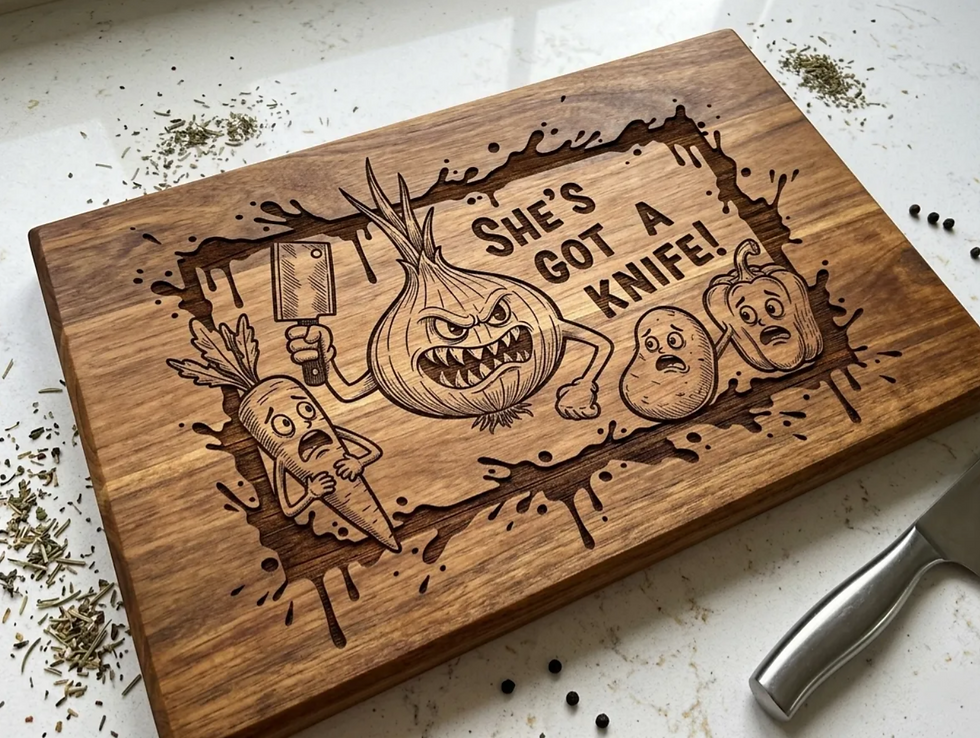
Laser cutting gets boxed into the “cute trinket” category far too often. Yes, it can make keyrings, ornaments, and table numbers. But the same process can also solve awkward workshop problems, produce practical homewares, and turn a simple gift into something personal without making it feel mass-produced.
The real strength of laser cutting is precision. A design can be drawn to suit a specific size, material, fixing point, logo, name, or pattern, then cut or engraved with repeatable accuracy. That makes it useful for small one-off jobs, short product runs, custom home projects, event gifts, and trade work where standard hardware does not quite fit.
From plywood brackets made to an exact measurement to engraved cutting boards and personalised keepsakes, custom laser cutting can be practical, attractive, and surprisingly flexible.

Laser cutting is built for precise custom work
Laser cutting uses a focused beam to cut or engrave material based on a digital design. That design might be a simple rectangle with holes in the right places, a curved bracket, a complex decorative pattern, or a name engraved into timber.
The process works especially well when a project needs:
Accurate repeat cuts
Small details that would be hard to cut by hand
Custom shapes instead of off-the-shelf sizes
Consistent results across multiple items
Clean engraving for names, dates, logos, or patterns
Common materials include plywood, hardwood, acrylic, MDF, card, leather, and engraving laminate. For practical jobs, plywood is one of the most useful options. It is strong for its weight, cost-effective, easy to source, and available in different thicknesses.
Laser cutting is also helpful because it does not need large production volumes to make sense. A single custom item can be worth making if it solves a real problem. A batch of 20, 50, or 100 can also be made once the design is ready.
That is where the process moves beyond novelty. It becomes a way to make things that fit properly.
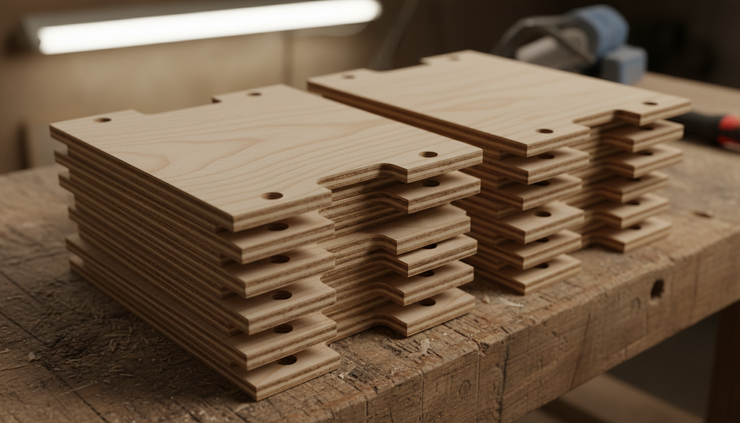
Custom plywood brackets can solve awkward size problems
Standard brackets are useful until they are not. A shelf might need an unusual depth. A caravan panel might need a specific support piece. A display stand might need a clean hidden fixing. A hobby project might call for a bracket that is lighter, wider, or shaped around another part.
Laser-cut plywood brackets are ideal for these situations because they can be made to suit the actual job, not the closest size available at the hardware store.
A bracket can be designed around:
Exact width, height, and depth
Screw hole size and spacing
Cable pass-throughs
Rounded or chamfered corners
Slots for tabs, bolts, or straps
Matching left and right pieces
Branding or labelling for assembly
Decorative curves or cut-outs
For example, a maker building a wall-mounted speaker shelf may need two 240 mm deep brackets with a rounded front edge and countersunk screw positions. A campervan owner may need lightweight plywood supports for a fold-down table. A market stallholder may need repeat brackets for a modular display that packs flat.
In each case, the bracket is not just a piece of plywood. It is a part made for a specific purpose.
Plywood thickness matters
The right thickness depends on the job. A small cable guide or decorative support might only need 3 mm plywood. A shelf bracket or load-bearing support may need 6 mm, 9 mm, 12 mm, or thicker plywood, depending on the span, fixing method, and weight involved.
For brackets that need strength, the design matters as much as the material. Triangular gussets, interlocking tabs, wider fixing areas, and grain direction can all help. If the bracket will carry weight, it is best to discuss the application clearly before cutting.
Laser-cut plywood can be very accurate, but it is still timber. It can flex, char slightly at the edges, and vary between sheets. For structural or safety-critical uses, a suitable engineer or tradesperson should check the design.
Cutting boards are practical gifts with a personal touch
Cutting boards are one of the best examples of laser work that feels useful rather than gimmicky. A good timber board already has everyday value. Add engraving, a custom shape, or a thoughtful design, and it becomes a gift people are more likely to keep.
Laser engraving works well on many timber boards, including acacia, bamboo, maple, walnut, and other hardwoods commonly used for kitchen boards. The laser can add names, dates, family recipes, coordinates, simple illustrations, or a small message.
Popular cutting board ideas include:
Wedding gifts with the couple’s names and date
Housewarming boards with a suburb, street name, or family name
Recipe boards engraved with a handwritten-style recipe
Grazing boards with custom lettering
Corporate thank-you gifts with tasteful engraving
Christmas gifts for families, teachers, or clients
There is a key distinction here. In many cases, the laser engraves the board rather than cutting the whole board from raw timber. This keeps the board strong and suitable for kitchen use when made from the right material and finished correctly.
If the board will be used for food, choose a suitable timber board and a food-safe finish. Avoid unsuitable materials for direct food contact. Plywood, MDF, and many coated products are not suitable as cutting boards. They can be great for display stands, templates, signs, and packaging, but not for chopping vegetables.
Engraving placement affects how the board is used
A cutting board can be engraved in the corner so the rest of the surface remains usable. A large centre engraving looks beautiful for display or grazing, but knife marks can eventually cut through the design if the board is used heavily.
For a gift that needs to be both attractive and practical, a corner mark, border design, or engraving on the reverse side often works best.
Personalised gifts can be useful, not throwaway
Personalisation does not have to mean another object that sits in a drawer. Laser cutting and engraving can create gifts that suit the person, the event, and the way the item will be used.
Some strong gift ideas include:
Name puzzles for children
Timber bookmarks with quotes or initials
Pet memorial plaques
Custom drinks coasters
Engraved bottle openers
Christmas ornaments with family names
Place cards that double as keepsakes
Cake toppers for weddings and birthdays
Small signs for cubbies, sheds, nurseries, and workshops
Anniversary gifts with a map outline or meaningful date
The best personalised gifts usually have one clear idea. A name and date may be enough. A short message can work better than a crowded design. Fine detail looks impressive, but clean spacing often makes the finished piece feel more polished.
For business gifts, a subtle engraved logo can be more appealing than a large mark. For family gifts, a meaningful phrase or location can make a simple object feel specific without overdoing it.

Project examples and what they might cost
Laser cutting prices vary because every job is different. The final cost usually depends on design time, material, machine time, thickness, engraving coverage, order quantity, and finishing. A simple cut in thin plywood is faster than deep engraving over a large hardwood board.
As a general guide, custom work often includes some or all of these costs:
Cost factor | What it covers |
Design setup | Drawing or preparing the file so it cuts correctly |
Material | Plywood, timber board, acrylic, MDF, or other stock |
Cutting time | Machine time needed to cut the shape |
Engraving time | Extra time for names, logos, patterns, or artwork |
Finishing | Sanding, oiling, cleaning, assembly, or packaging |
Quantity | Larger batches often reduce the per-item cost |
Here are some realistic project types and indicative pricing ranges in AUD. These are not fixed quotes, but they show how pricing can work.
Project | Typical scope | Indicative price range |
Simple plywood bracket | One-off small to medium part, supplied design or simple drawing | $15 to $45 each |
Batch of plywood brackets | 10 to 50 repeated brackets from the same file | Lower per item after setup |
Custom engraved cutting board | Supplied board or sourced board with names and date | $35 to $120 each |
Personalised coaster set | Four to six engraved timber or cork coasters | $25 to $80 per set |
Wedding place names | 30 to 150 names in timber or acrylic | Often priced per name |
Cake topper | Custom name or phrase in plywood or acrylic | $25 to $70 |
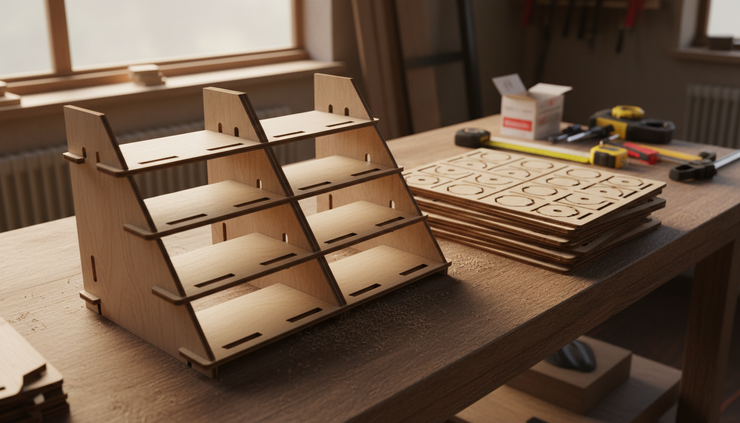
Display stand parts | Interlocking plywood pieces for markets or products | Quoted by size and complexity |
A useful rule is this: simple shape plus low quantity equals affordable custom work, while large engraving areas, thick material, and complex artwork add time.
Supplying a clean file can reduce setup time. Common file types include SVG, DXF, AI, and PDF, although requirements vary by machine and workshop. If the idea only exists as a sketch, that is fine too. A clear photo with measurements can often be turned into a usable cutting file.
Why choose custom laser-cut items
The main benefit of custom laser cutting is fit. The item can match the space, purpose, message, or event instead of forcing a standard product to do the job.
For practical projects, that means:
Brackets line up with existing holes
Templates match the part being traced
Display pieces pack flat and assemble quickly
Labels and tags stay consistent
Repeated parts look the same
For gifts, custom laser cutting gives control over the details. Names can be spelt correctly. Dates can match the occasion. Materials can suit the style of the home or event. A design can be simple, playful, rustic, modern, or minimal.
It also suits small runs. A business can order 20 engraved thank-you gifts without needing a huge production run. A family can order one board for a milestone birthday. A maker can test a bracket design before ordering more.
That flexibility makes custom laser cutting useful for:
Home storage projects
Campervan and caravan fit-outs
Market displays
Event signage
Hospitality boards and menus
Product packaging inserts
Workshop jigs and templates
Personal gifts
Small business merchandise
The process is also repeatable. Once a design works, it can be cut again months later. That is handy for businesses, makers, and anyone building a project in stages.
How to get the best result from a custom order
A good laser-cut project starts with clear information. The more specific the brief, the easier it is to quote accurately and make the item fit the job.
For brackets and practical parts, include:
Overall dimensions in millimetres
Material preference and thickness
Hole size and hole spacing
The weight or use case, if relevant
A sketch, photo, or existing part to match
Quantity needed
Any finish requirements
For cutting boards and gifts, include:
Names and dates exactly as they should appear
Preferred font style, if known
Design size and placement
Whether the item is for display or everyday use
Timber preference
Quantity and deadline
Proofing matters. Check spelling, dates, and measurements before cutting. A laser cutter follows the file closely, so a 5 mm error in the design becomes a 5 mm error in the finished part.
For tight-fitting pieces, a prototype can be worthwhile. Cutting one test bracket or sample slot can save time before producing a full batch.
Custom work makes sense when the details matter
Laser cutting is at its best when a project needs accuracy, repeatability, or personal detail. That might be a plywood bracket made to fit an awkward shelf, a cutting board engraved for a wedding, or a batch of meaningful gifts for clients, guests, or family.
Trinkets have their place, but custom laser cutting can do far more. It can make useful parts, beautiful keepsakes, and practical items that feel considered because they were made for a specific person or purpose.
If there is a size to match, a name to engrave, a shape to cut, or an idea that standard products cannot quite solve, laser cutting is often a smart place to start.


Comments